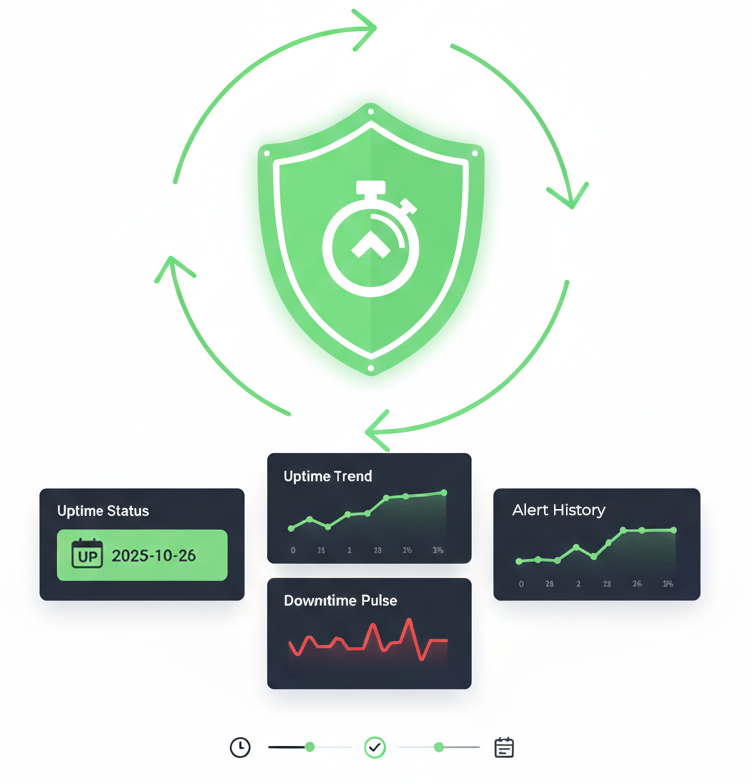
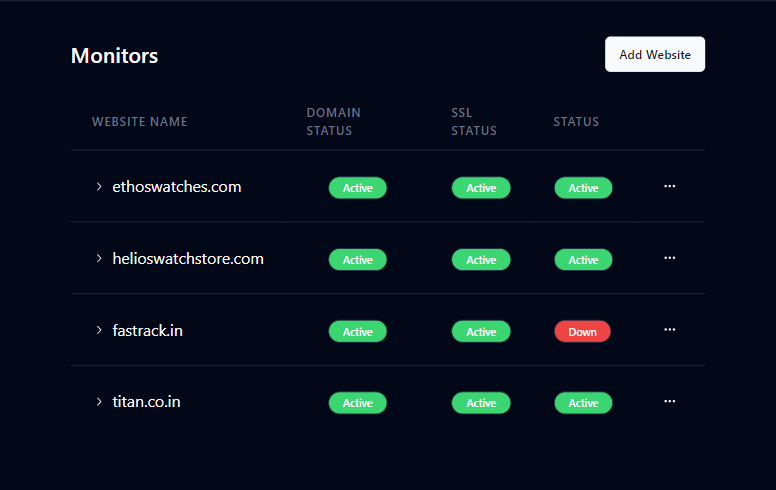
Know the moment your website goes offline. Monitrue continuously checks availability and sends instant alerts, enabling your team to respond immediately and minimize downtime.
Always Informed
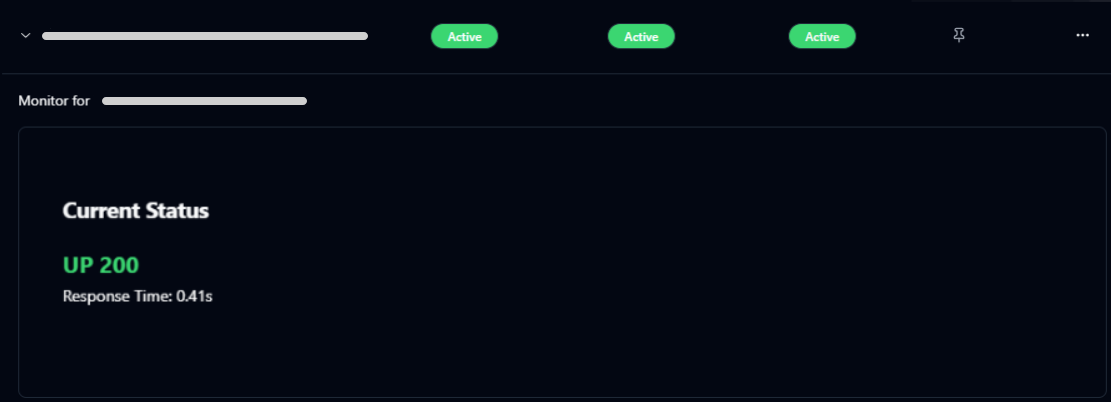
Response Time Insights
Understand how fast your website responds over time. Track response speed, detect performance degradation, and identify slowdowns before they impact visitor experience.
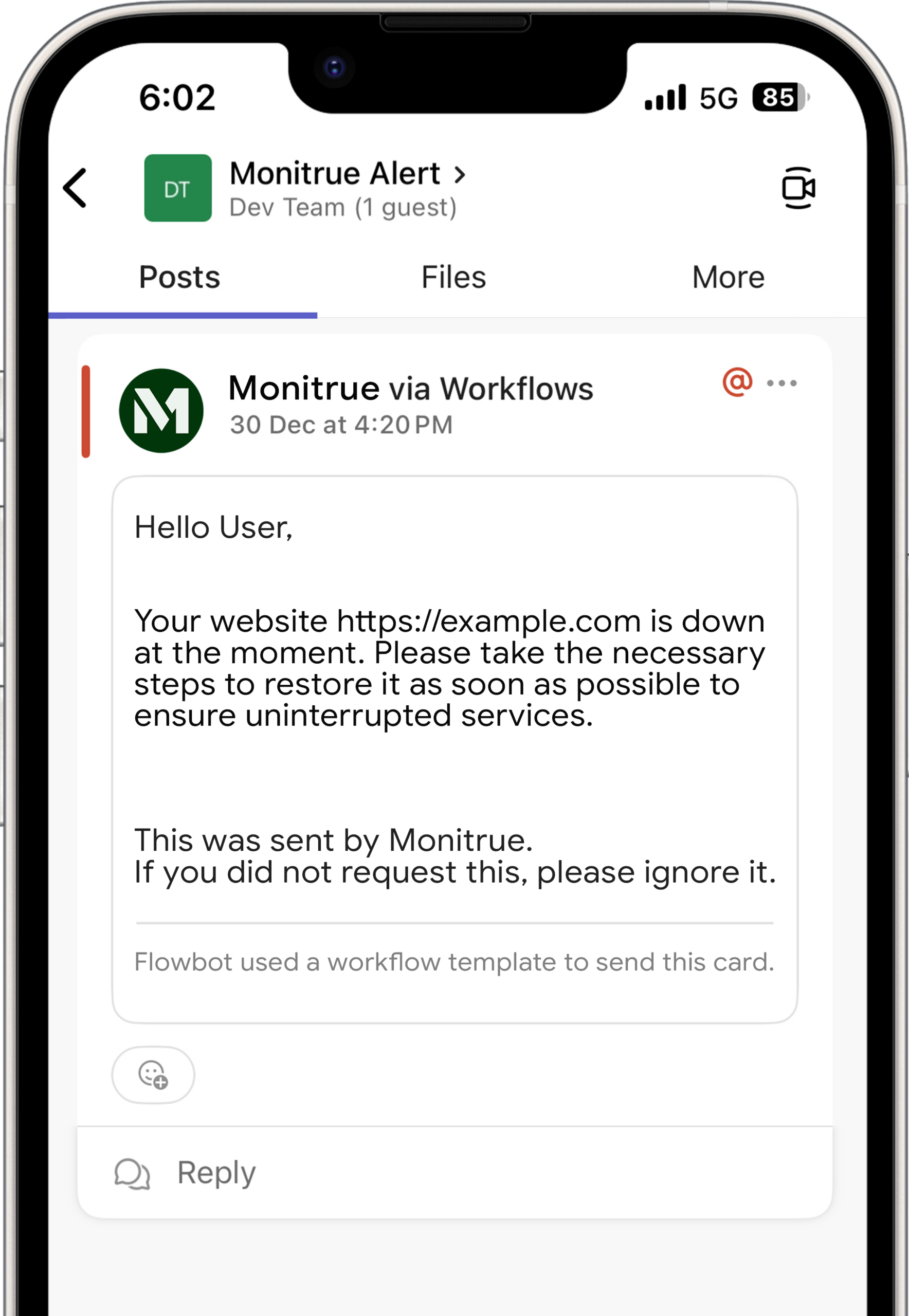
Microsoft Teams Notification
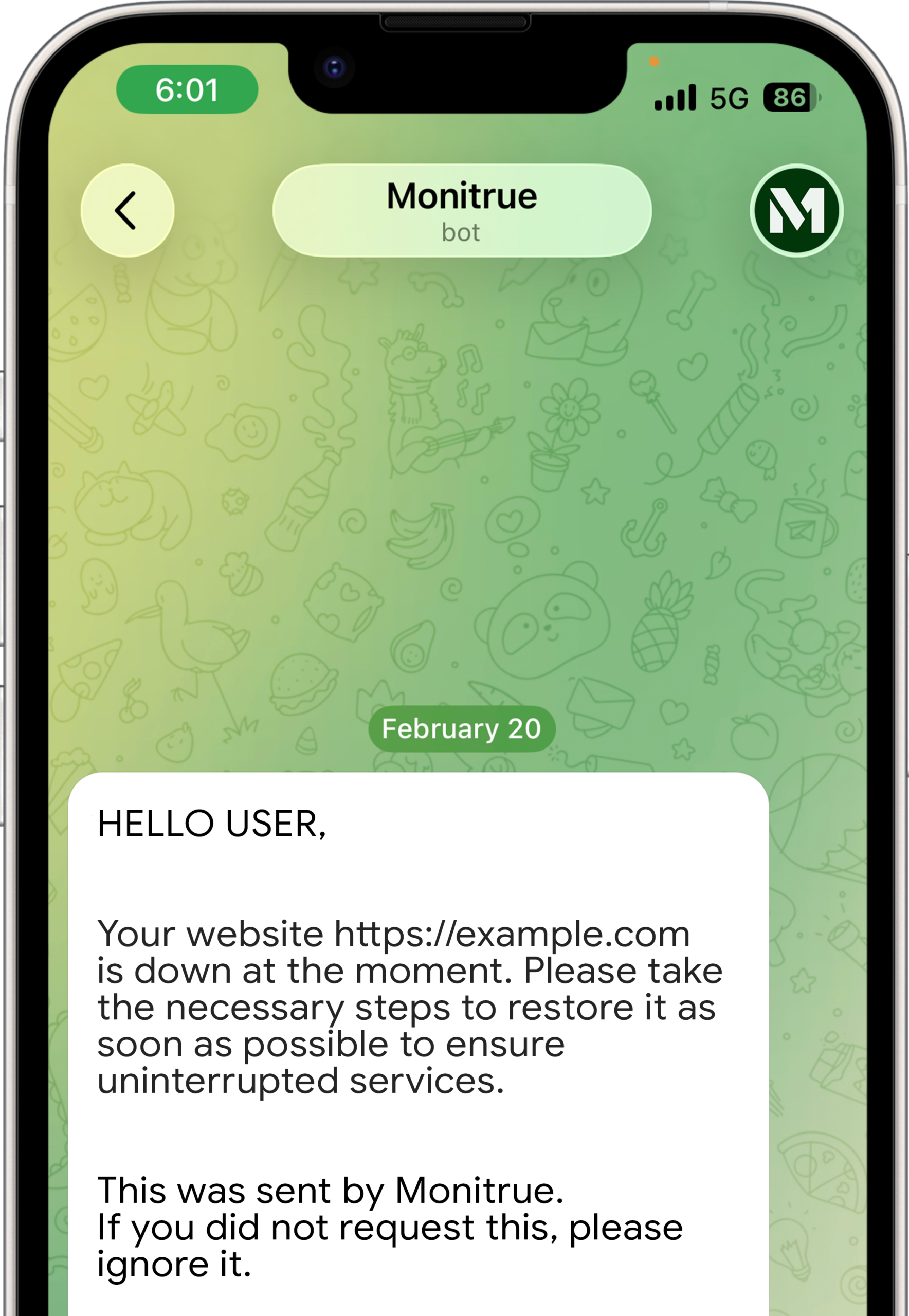
Telegram Notification
Reliable Website Monitoring
Ensure your site is always online, fast, and accessible to every visitor.
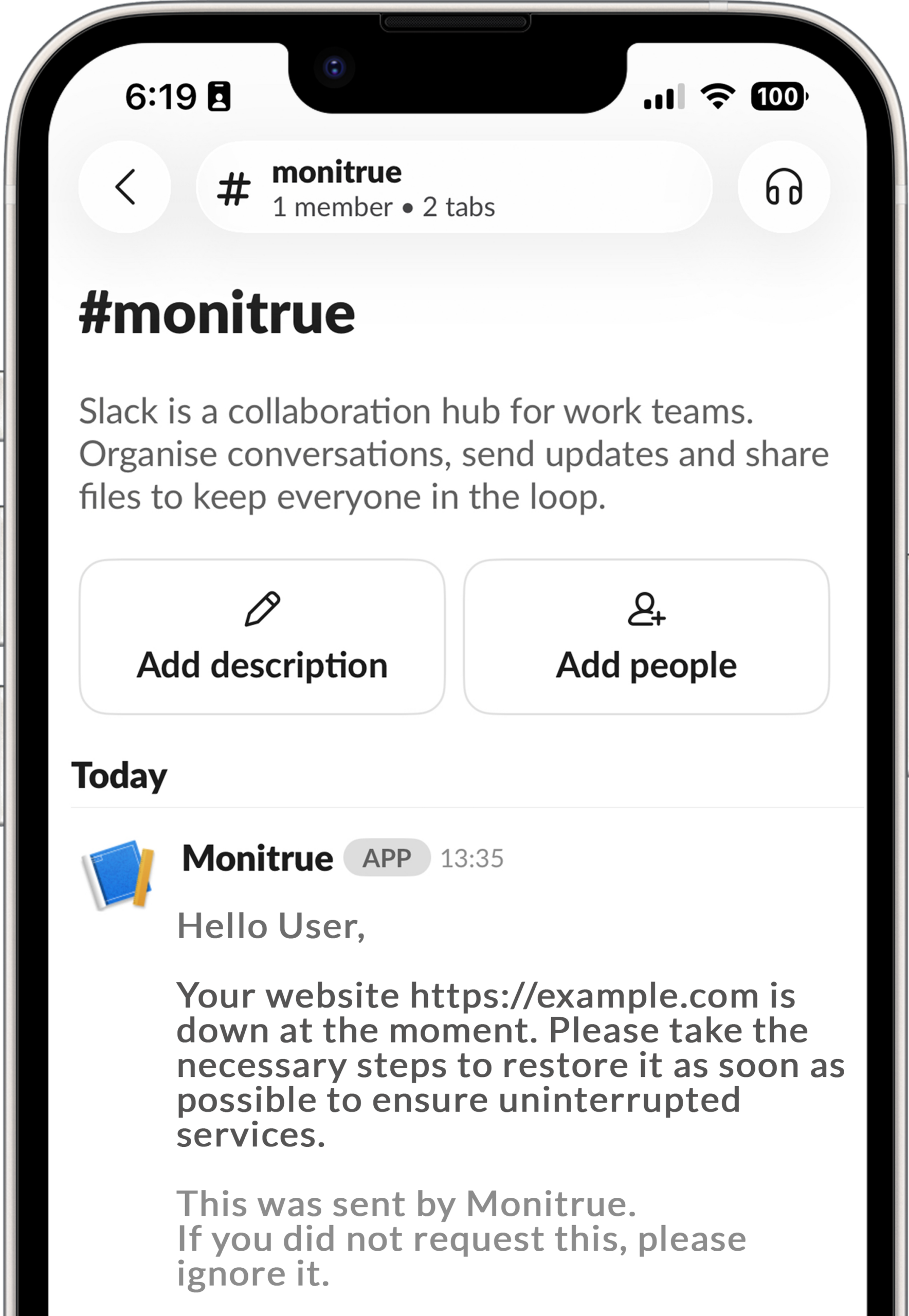
Slack Notification
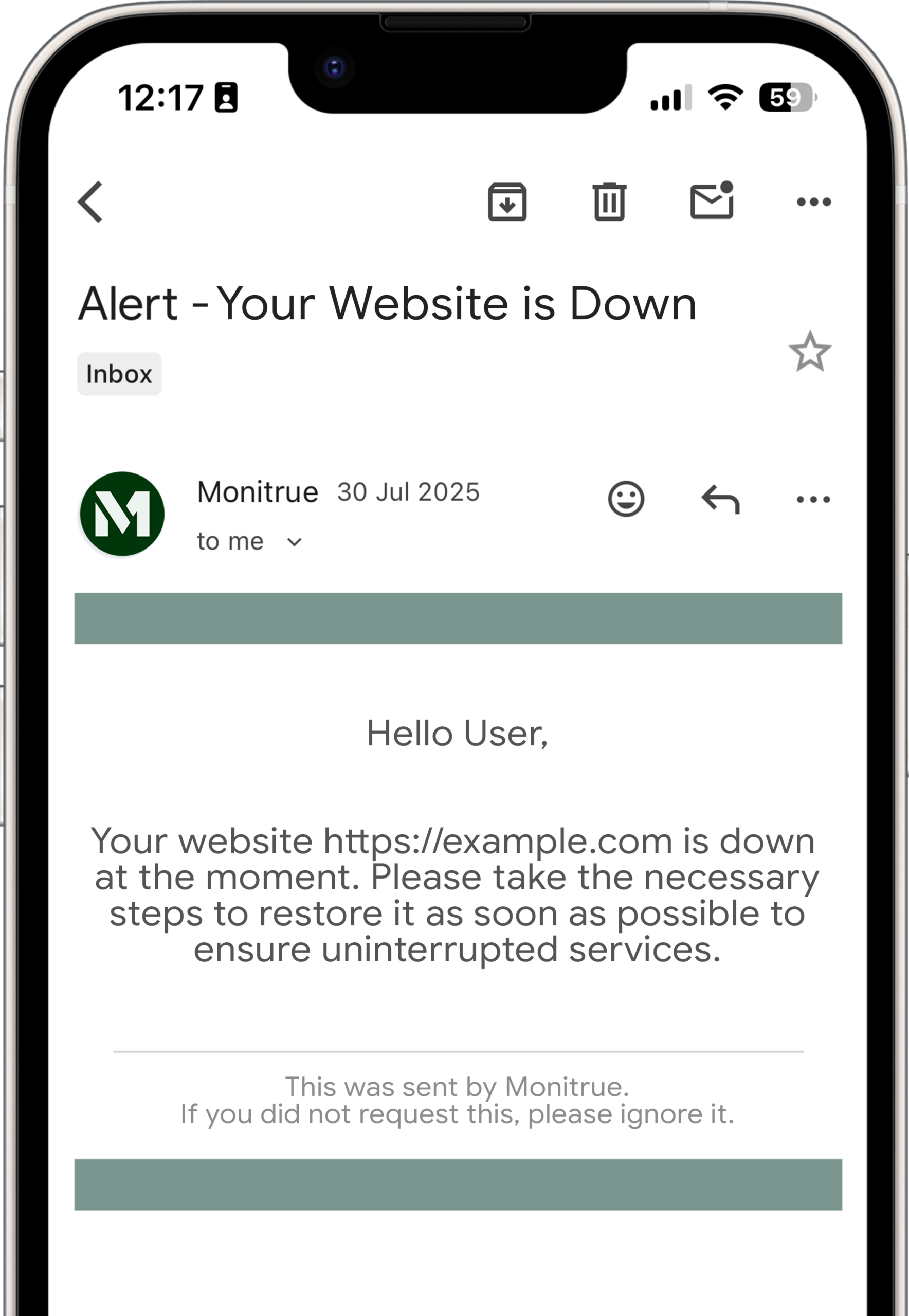
Email Notification
Email
Immediate alerts straight to your inbox
SMS
Real-time downtime updates on your phone
Teams
Keep your team informed without leaving your workspace
Slack
Team notifications directly in Slack channels
Telegram
Alerts delivered directly to your Telegram chats
Notifications
Seamless Notifications Across Your Favorite Tools
Set custom thresholds and receive alerts the moment performance drops, so your team can react fast and keep your website running smoothly.
Launch with ease
Never Miss Downtime. Enable Real-Time Website Monitoring Alerts
Getting started with Monitrue is simple. Sign up, add your website URL, choose your monitoring preferences, and select how you want to receive alerts. Once set up, Monitrue starts monitoring your website automatically.
Can I monitor multiple websites with one Monitrue account?
Yes, you can monitor multiple websites and endpoints from a single dashboard, making it easy to manage all your digital assets in one place.
Does uptime monitoring affect my website’s performance?
No, Monitrue uses lightweight monitoring requests that do not impact your website’s speed or user experience.
How does Monitrue detect false downtime alerts?
Monitrue uses multiple verification checks before confirming downtime, reducing false alerts caused by temporary network issues or local outages.